
Vertical bayonet vaporizers are good general use vaporizers. The flexibility that numerous materials of construction combinations can provide allows these vaporizers to be used for a wide variety of process fluids. Armstrong Chemtec is a preferred supplier for multiple licensed refinery processes and has a long history of providing these vaporizers for chlorine service. Armstrong Chemtec is a member of both the Chlorine Institute and Euro Chlor, and has participated on multiple task groups to review and revise Chlorine Institute’s Pamphlet No. 9, including the two most recent editions.
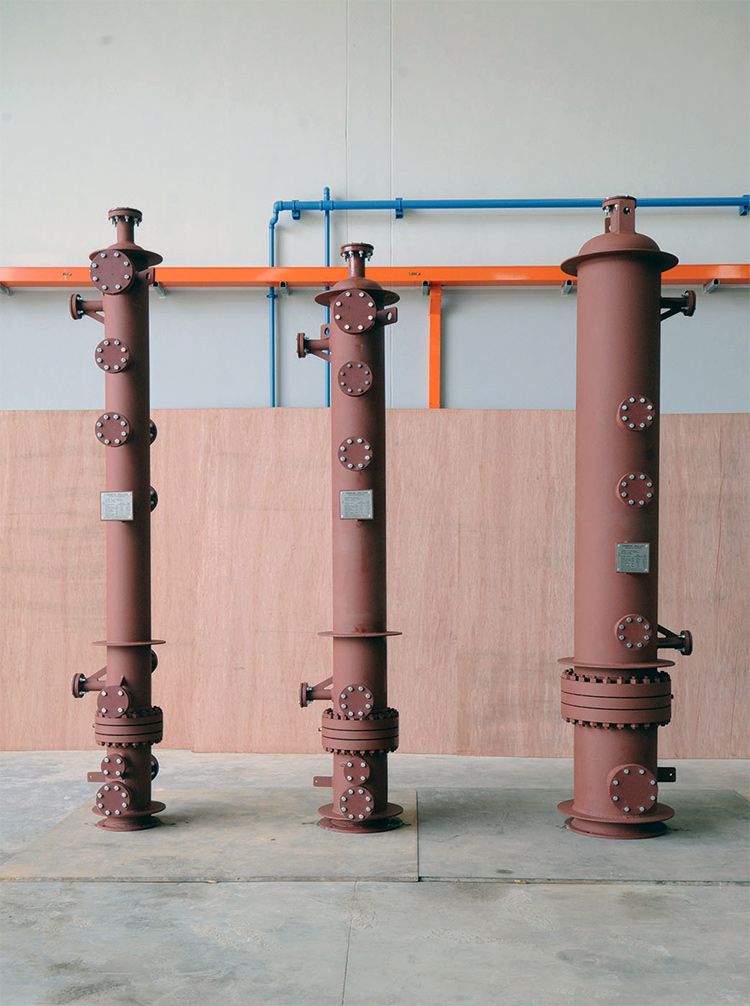
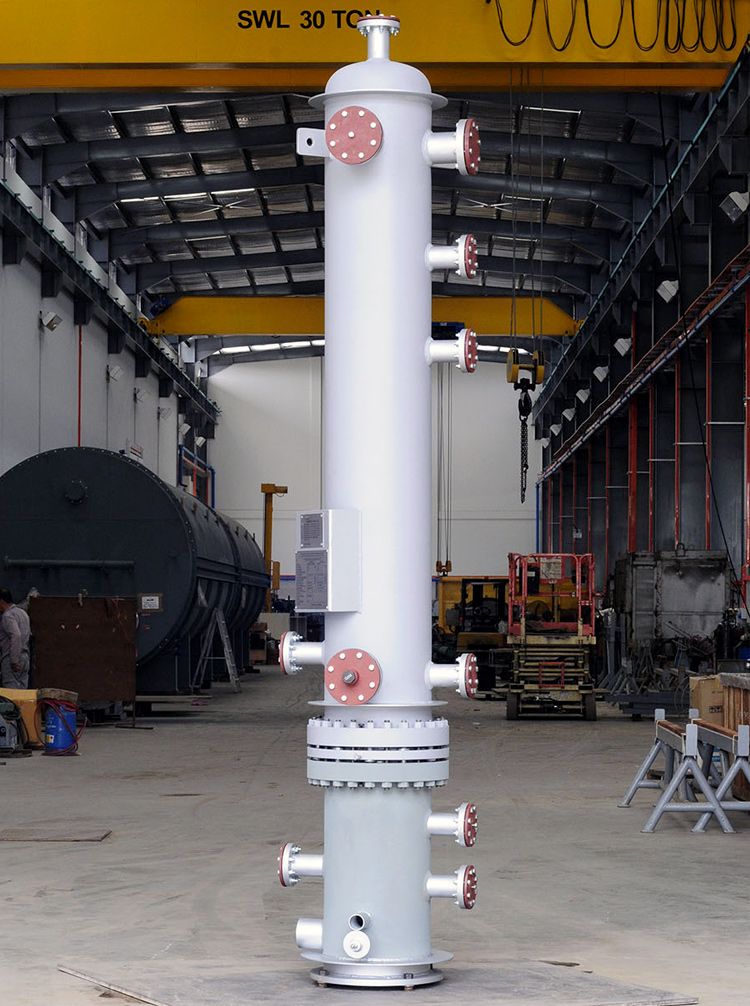
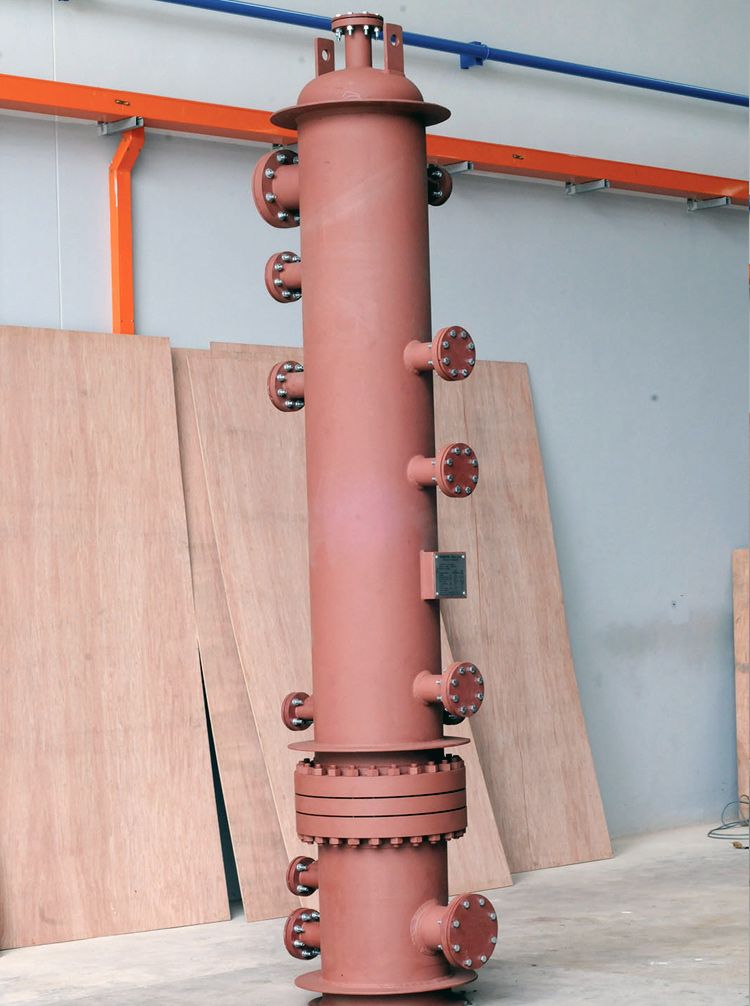
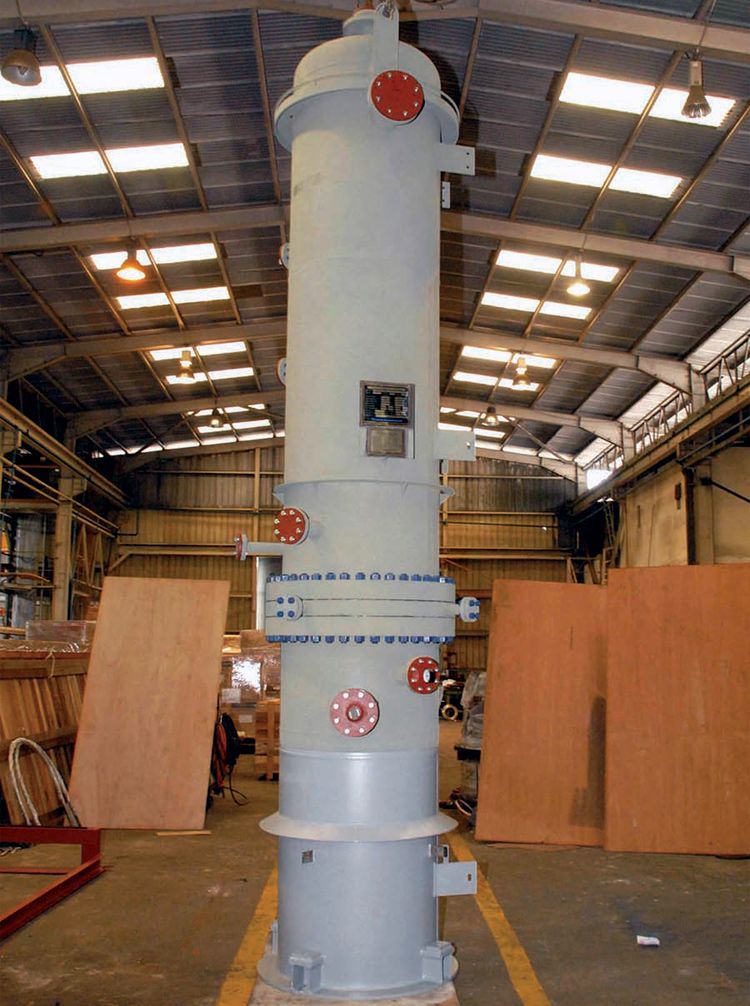
Vertical bayonet vaporizers are good general use vaporizers. The flexibility that numerous materials of construction combinations can provide allows these vaporizers to be used for a wide variety of process fluids. Armstrong Chemtec is a preferred supplier for multiple licensed refinery processes and has a long history of providing these vaporizers for chlorine service. Armstrong Chemtec is a member of both the Chlorine Institute and Euro Chlor, and has participated on multiple task groups to review and revise Chlorine Institute’s Pamphlet No. 9, including the two most recent editions.
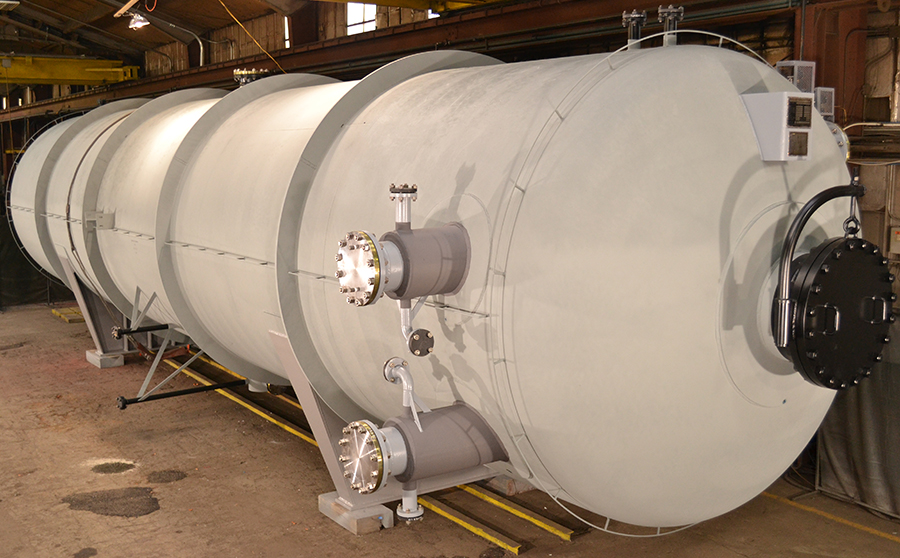
Loadout vaporizers are steam heated and well suited to handle combinations of very high pressures (design pressures up to 120 bar (g) (1,800 psi) and very low temperatures (typically around -74 °C ( -101°F) ) because they do not have tubesheets. Because these vaporizers can go from an idle state to full capacity instantaneously, they are frequently called on to replace or supplement feed to downstream processing units.
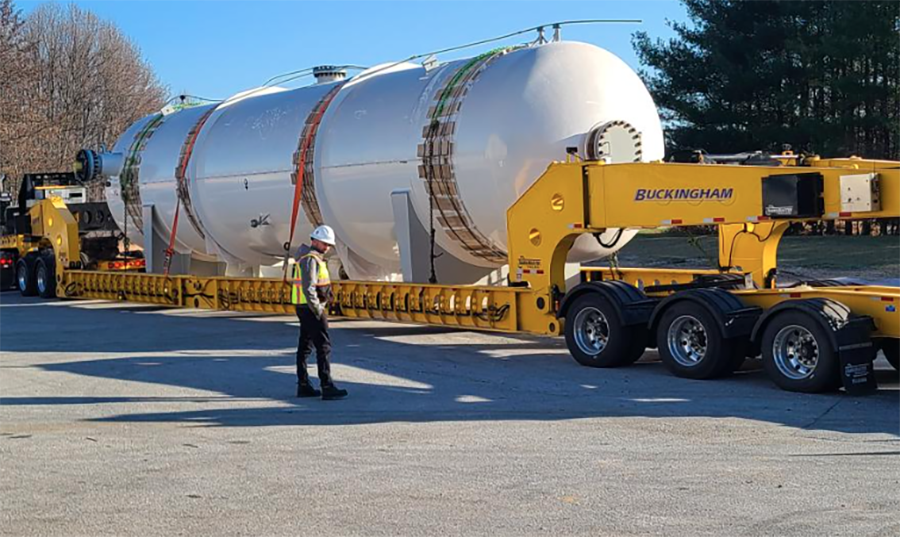
Flare superheaters can be used to heat the flare gas stream from temperatures as low as -73 °C ( -100 °F) and can accommodate low allowable pressure drops.
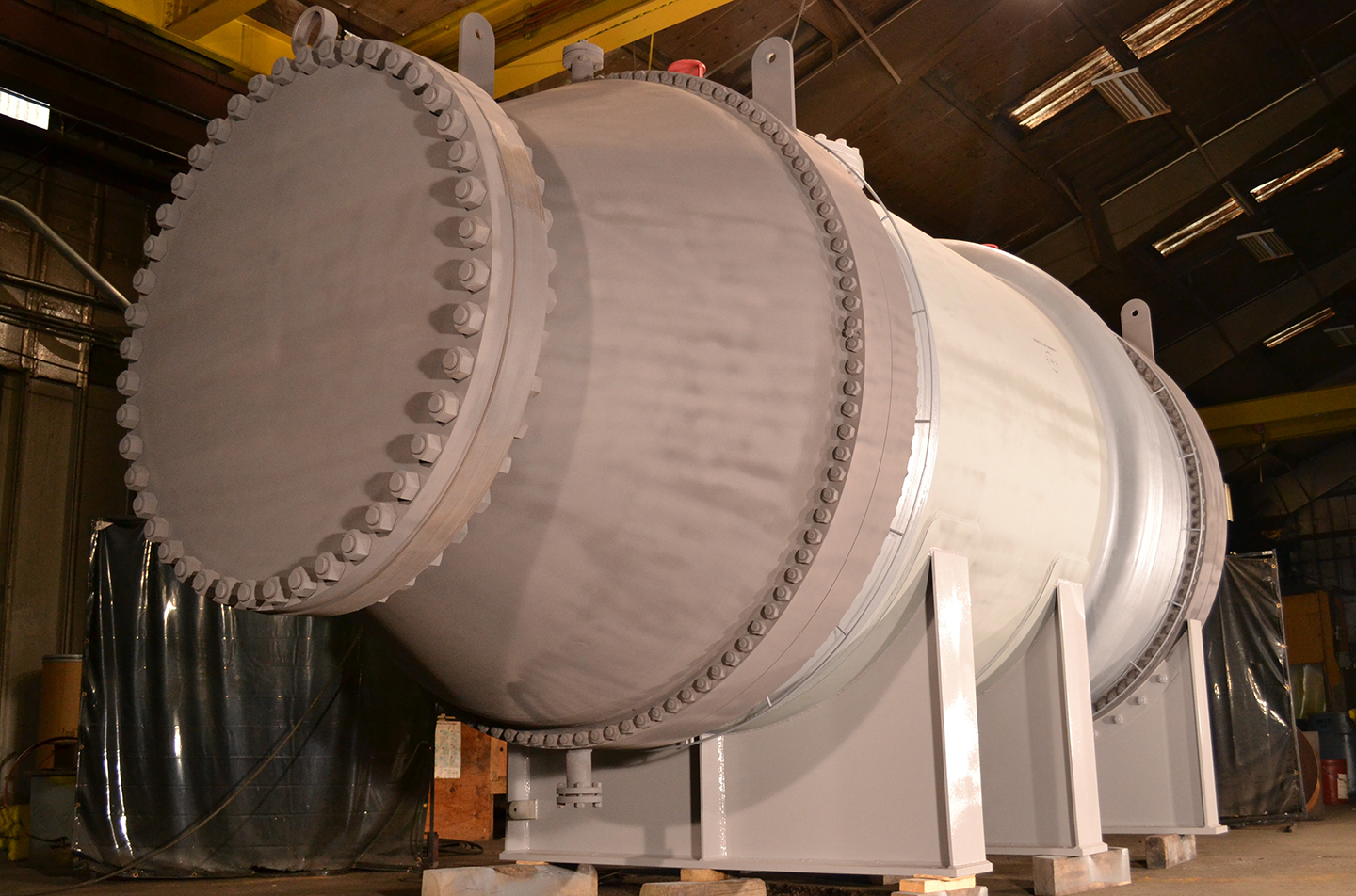
When a steam utility is unavailable, electric heat may be a safe sensible first choice option. Electric heaters have been used in off site tanks for bituminous products for many years. But recently, with the move to environmentally friendly processes, and zero emissions at point of use, Electric Vaporizers have been put into service for fluids such as NH3, CO2, SO2, SO3 etc. These can be supplied skidded with valves, pumps, controls and piping. These are now commonly found in power stations where NOx and SOx emission reduction systems are used. Contact us for your needs and let us help you make a proven environmentally friendly choice.
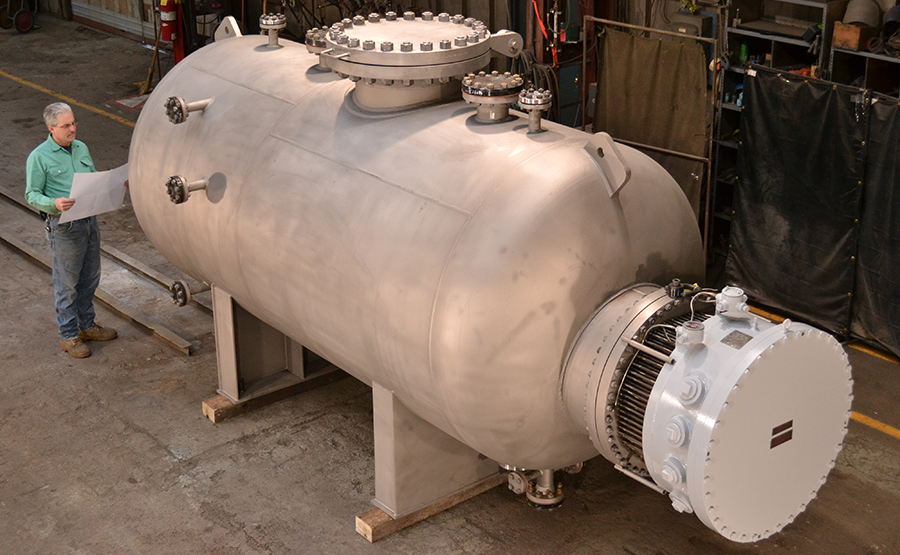
Fixed Tubesheet Superheaters are one of the three superheater equipment types that ACG offers to superheat a process fluid using steam as a heating fluid, the other two being a vertical bayonet vaporizer and a shell & coil vaporizer. The FTS is a single pass heat exchanger that holds the process fluid on the tube side, which passes through a bank of parallel straight tubes through a steam heated shell. It is good for very high fluid flow rates at medium inlet temperatures (compared to a SCV which is great at very low temperatures). This equipment most resembles a traditional TEMA type heat exchanger as it has a typical flat tubesheet, parallel straight run tubes, and a flanged and flued shellside expansion joint to absorb the differential movement between the tubes and the shell. The FTS is a pressure vessel and is typically designed to ASME Section VIII and carries a u-stamp.
This design is good for very high flow rates as it can accommodate a large number of parallel tubes in a traditional TEMA tubesheet while handling cold inlet process fluids. The large number of tube to tubesheet welds are a traditional failure point for TEMA type exchangers where the cold inlet fluid meets the hot steam at the tubesheet, which ACG mitigates through use of ferrules and a distributor plate on the cold process inlet end of the exchanger to protect the welds from thermal shock. ACG also avoids corner joint welds and flanged connections at the tubesheet to shell junctions to mitigate potential leaks due to the temperature differences between the hot shell side and cold tube side fluids. While they resemble TEMA type exchangers, an FTS does not utilize segmented flow baffles on the shell side to direct steam flow, but rather full tube support plates with cutout areas to evenly distribute steam and fluid condensation.
FTS are typically used to superheat Ethylene or Hydrocarbons at inlet temperatures as low as -100°F [-73°C].
FTS are typically carbon steel construction on the shell side and either 304L stainless steel or 316L stainless steel on the tubeside. ACG includes additional stainless steel shell courses attached to the tubesheets on the shell side (steam service) to mitigate thermal shock effects from the cold process fluid to the hot steam side. This also provides butt welded girth seams that can be inspected via x-ray examination [RT] instead of a corner joint between the tubesheet and shell courses that cannot be RT'd.
We have built FTS superheaters up to 84" [2.13 m] diameter and 20 ft [6 m] overall length.
Shell and coil vaporizers are an ACG internally designed proprietary type of cryogenic vaporizer equipment. They are designed to vaporize a very cold process fluid using steam, with the process fluid located on the tube side and the heating medium (steam) located on the shell side. They were originally designed to vaporize ethylene but work very well for a many other fluids, and are typically installed in vital locations where an equipment failure would be catastrophic so are overdesigned to have a long life. These are usually installed as an emergency ethylene vaporizers or flare system vaporizers that must be 'always on' in a hot and ready position so that they provide an immediate and reliable response when called upon. They take cryogenic fluid at the process inlet then preheat, vaporize, and superheat it using steam. The SCV is a pressure vessel and is typically designed to ASME Section VIII and carries a u-stamp.
SCV's are designed to be 'always on' by connecting the shell side (steam) to the plant's steam system so that there is always a heating medium flowing through the equipment even when it is not in active vaporization service, which allows the plant to call upon the SCV for an immediate response to vaporize a cryogenic process fluid. SCV's can go from idle to full capacity instantaneously.
They are designed for the thermal shock of receiving cryogenic process fluid on the tube side by utilizing a proprietary header and heat transfer coil design instead of a flat tubesheet that would be present in a typical TEMA type shell and tube heat exchanger. The header and coil design mitigates mechanical stress issues of tube to tubesheet welds present in TEMA type exchangers and can handle higher design pressures than a traditional flat tubesheet, which results in a more robust and reliable exchanger design for a critical role. We often include a custom inlet liner and ferrules to further protect the header to coil weld joints from thermal shock and extend the equipment service life.
SCV's are designed for process temperatures as low as -257°F [-161°C] and pressures up to 1800 psig [120 barg] on the tubeside. They vaporize Ethylene, Propylene, Propane, Ethane, Butane, and Hydrocarbons on the process side (tube side) using steam on the heating side (shell side).
The cryogenic nature of the process fluid requires material suited to resist brittle failure at the very low design temperatures and high pressures. Typical tubeside construction is 304L or 316L stainless steel, Inconel 600, or Incoloy 8025. The shell side houses steam and is made from Carbon Steel.
SCV's can be up to 12 ft [3.6 m] in diameter and 50 ft [15m] overall length.
A u-tube vaporizer is one of the equipment types that ACG manufactures which vaporizes a process fluid by using steam on the shell side. Internally we refer to them as a 'Sweeny Vaporizer' [SWE], but no outside customers would know what that means. SWE's are used for applications where the inlet and boiling temperatures are below 32°F but not colder than approximately -50°F. At warmer temperatures a vertical bayonet would be used, and for colder temperatures a shell and coil would be used. It consists of a TEMA type u-bundle where the process fluid makes two passes through the steam heated shell with process flud flow rates up to 500,000 lb per hour. The SWE is a pressure vessel and is typically designed to ASME Section VIII and carries a u-stamp.
An SWE can accommodate high flow rates at relatively low temperatures through its two pass u-tube design while incorporating multiple features to mitigate thermal shock resulting from the low process fluid inlet temperatures and high steam shellside temperatures. ACG includes ferrules on the inlet tubes to reduce the stresses at the tube to tubesheet welds and twisted tape turbulators in the tubes to increase heat transfer in the tubes. ACG also avoids corner joint welds and flanged connections at the tubesheet to shell junctions to mitigate potential leaks due to the temperature differences between the hot shell side and cold tube side fluids. While they resemble TEMA type exchangers, an FTS does not utilize segmented flow baffles on the shell side to direct steam flow, but rather full tube support plates with cutout areas to evenly distribute steam and fluid condensation.
Ethane, Ethylene, Hydrogen Chloride, and Butane are typical process fluids for an SWE. It is designed to vaporize the process fluid at inlet conditions down to -50°F [-45°C] and up to 500,000 lb/hr flow rates. It serves a similar purpose as a fixed tubesheet superheater but cannot reach the lower allowable inlet temperature of the FTS due to the u-tube design instead of a single pass of straight tubes as present in the FTS. The u-tube result in higher tube to tubesheet stresses than a single pass straight tube since the u-tubes will have a colder process fluid on the outbound tube run next to a hotter process fluid on the inbound tube run.
SWE are typically carbon steel construction on the shell side and either 304L stainless steel or 316L stainless steel on the tubeside. ACG includes additional stainless steel shell courses attached to the tubesheets on the shell side (steam service) to mitigate thermal shock effects from the cold process fluid to the hot steam side. This also provides butt welded girth seams that can be inspected via x-ray examination [RT] instead of a corner joint between the tubesheet and shell courses that cannot be RT'd.
We have built superheaters up to 84" [2.13 m] diameter and 20 ft [6 m] overall length.
A vertical bayonet vaporizer is an Armstrong-Chemtec designed original legacy piece of equipment that offers a highly reliable method of vaporizing process fluids using steam or similar heat transfer fluid. They are constructed in three parts to allow disassembly, inspection, and maintenance and operate with a steam chest on the bottom, a removable tube bundle to distribute the heat from the steam to a process fluid, and a shell cover that the process fluid flows into. The process fluid flows into the steam chest, directly contacts the tube bundle containing steam, and is heated by the steam and vaporizes. The VBV is scalable with sizes ranging from 3" to 48" in diameter and up to 25 ft overall height to cover a range of process duties. The equipment type is specified by UOP and AXENS for hydrocarbon services. The VBV is a pressure vessel and is typically designed to ASME Section VIII and carries a u-stamp.
A VBV has unlimited turn down and can be considered 'always on' in continuous operation with steam flowing through the steam chest even when no process fluid is present. This is an advantage compared to an electric vaporizer as the heating elements in an electric heater will burn out if they are left on when no process fluid flow is present. The vertical design requires a small footprint and allows for vaporizing and superheating of a process fluid to occur in the same piece of equipment, and incorporates passive freeze up protection built into the design. This is a low maintenance item that offers excellent reliability and is a core part of the ACG product line.
VBV's are designed for process inlet conditions above 32°F [0°C] and historically service Chlorine, Hydrocarbons, Ammonia, Propane, Sulfur Dioxide, Liquid Propane Gas [LPG], Butane, Phosgene, Sulfur Trioxide, Organics, Hydrogen Chloride, and Benzene.
VBV's are scalable to accommodate a wide range of heat duties and ACG differentiates them with a type designation based on their nominal outside diameter. We can customize the MOC of the wetted surfaces to meet different process requirements, and the majority of VBV's are either carbon steel or stainless steel. High alloy designs are available if required. We specify post weld heat treatment on the wetted surface of carbon steel vaporizers when appropriate for a given process fluid.
Sizes: A (3"), B (4"), C (6"), D (8"), E (10"), F (12"), G (16"), H (20"), I (24"), J (30"), K (36"), L (42"), M (48")
MOC: Carbon Steel, Stainless Steel, Hastelloy C276, Inconel 600, Monel 400, Nickel 201
A horizontal kettle type exchanger would typically be used to vaporize a process fluid in a TEMA type shell and tube heat exchanger, which requires a large footprint and large diameter shell. The VBV accomplishes the same task in a small footprint while incorporating superheat capability into the equipment. It does share similarities with a shell and tube exchanger such as a removable bundle with a tubesheet, segmented baffles, and tie rods, but the design is unique in that it is not a u-tube bundle but rather a series of steam distributor tubes housed in pressure containing tube sheaths to achieve the same purpose.